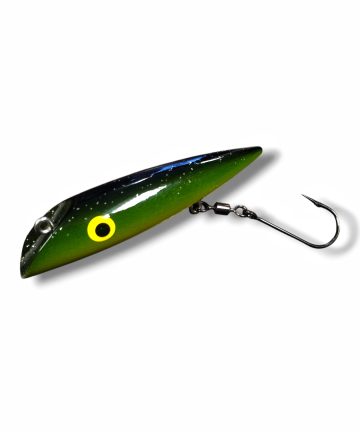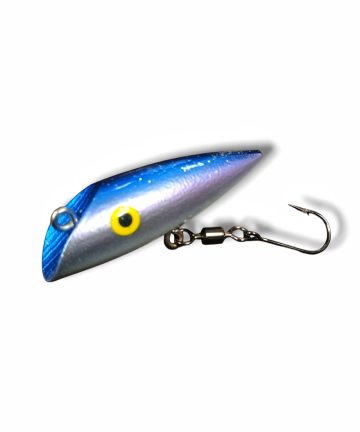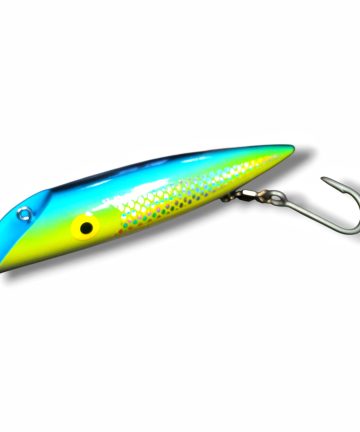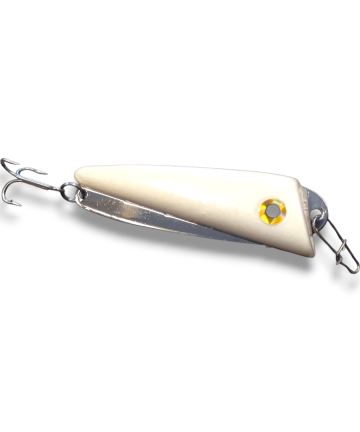
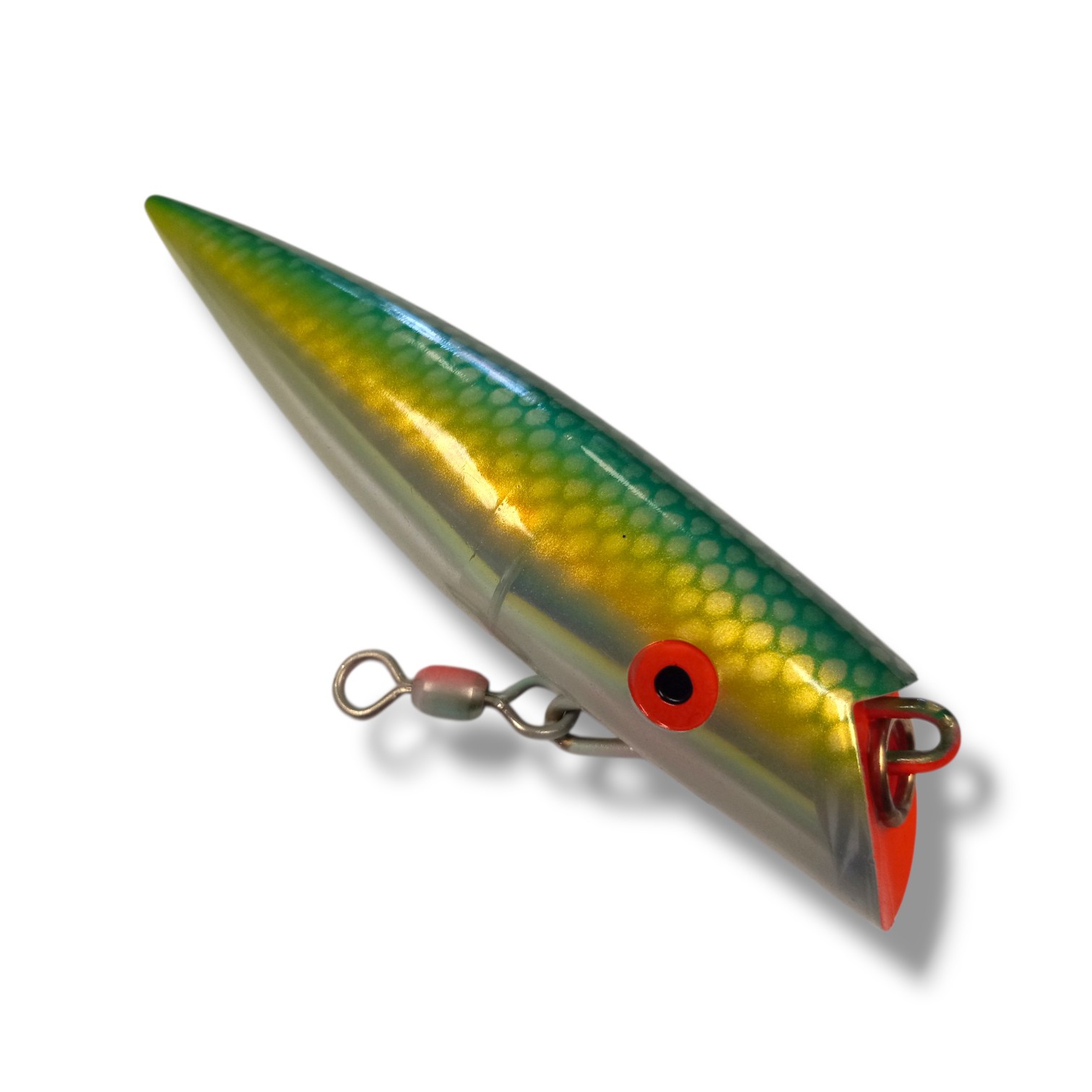
TOMIC LURES RVP2-118ii
Price range: $24.99 through $29.99
RVP2-94ii 6 Classic, 6 Tubby, 7 Classic
Handcrafted on Vancouver Island, British Columbia, Tomic Plugs have been the secret weapon of West Coast commercial trollers, local charter captains, and elite salmon anglers for over 60 years.
Description
Dominator of the Deep – The Tomic Salmon Plug
Handcrafted on Vancouver Island, British Columbia, Tomic Plugs have been the secret weapon of West Coast commercial trollers, local charter captains, and elite sport guides for over 60 years.
Engineered with an ultra-durable, hollow butyrate plastic body, Tomic plugs deliver a highly aggressive, erratic side-to-side swimming action that triggers violent, predatory strikes. Because they swim perfectly entirely on their own, you can completely eliminate heavy inline flashers. This allows you to enjoy a true, unweighted fight with the fish of a lifetime!
Every single plug is precision-molded and airbrushed by hand by local artisans in Gold River, BC, ensuring a premium, bite-resistant lacquer finish that stands up to the sharpest teeth.
How to “Pull the Pin” in 6 Easy Steps
For anglers looking to customize their presentation, pulling the factory pin is a classic West Coast technique that alters how the plug tracks and prevents fish from using the lure body as leverage to shake the hook.
Step 1: Cut the Pin
Use heavy-duty wire cutters to snip the factory stainless steel metal tow bar right at the top loop of the plug.
Step 2: Pull it Out
Grip the bottom loop of the pin firmly with needle-nose pliers and pull down to slide the entire metal rod completely out of the plug.
Step 3: Thread the Leader
Take your heavy monofilament leader line and thread it straight down through the empty hole running from the top of the plug out the bottom.
Step 4: Add a Bead
Slide a small round plastic or glass bead onto your leader line right below the belly of the plug to act as a buffer.
Step 5: Tie the Hook
Tie your single stainless steel Siwash hook directly to the end of the leader using a strong knot like a Trilene or Uni knot.
Step 6: Measure the Setback
Pull your leader until the bead and the eye of the hook rest tightly against the bottom hole of the plug body, then hit the water!
Alternative Setup: How to Rig a 3/0 Single Hook Stinger Using Heavy Braid
When running massive 6-inch and 7-inch plugs, rigging a downsized 3/0 single hook stinger prevents short-striking salmon from missing the steel. Using an ultra-strong, zero-stretch heavy braid (50 lb to 100 lb) attached directly to the belly placement swivel keeps the rig incredibly bite-resistant while maximizing the plug’s natural action.
Step 1: Choose and Tie Your Hook Configuration
Cut a 14 to 20 inch section of heavy braid. You can attach your 3/0 single hook using one of three highly effective methods:
- Option A (Standard Eye Knot): Pass a doubled section of the braid through the eye of your hook. Secure it tightly using a high-strength knot, such as a Palomar knot or a multi-wrap Uni knot. Cinch it down hard against the eye and trim the short tag end close.
- Option B (The Snell Knot): Thread the braid down through the front of the hook eye so it lies parallel along the hook shank. Form a loop with the trailing end, and wrap the braid tightly around both the shank and the line 6 to 8 times, moving toward the bend of the hook. Pass the tag end back through the loop, moisten, and pull tight. This snell configuration keeps the hook perfectly inline with the braid for unmatched hook-up ratios.
- Option C (Standard Loop Eye Knot): This is my favourite set up. Take approx 20 inches of your chosen braid, double over both line ends to meet and create a simple loop. Push the loop end through the eye of the belly swivel, feed both cut ends through the loop locking onto the swivel eye. Straighten both cut tag ends towards the tail of the plug. Slide both tag lines through the eye of a 3/0 or other sized hook. Slide hook up line to the desired hang lenth for the hook. Terminate the two tag lines together by looping around the shank of the hook and tie off with a single simple overhand knot. Pull line tight to secure the knot against the eye of the hook. Add a dab of super glue. You can fish like that or as additional slip stop, add a short section of heat shrink tube, cover the eye of the hook and come down the shank towards the bend a few centimetres.
Step 2: Measure the Stinger Length
Lay your plug flat on a table. Hold the newly tied 3/0 hook near the very tail end of the plug body, allowing the hook bend to trail roughly half an inch to an inch past the tail of the plug. Pull the loose end of the heavy braid forward along the belly of the plug toward the factory hook placement swivel.
Step 3: Tie to the Belly Swivel
With the hook held perfectly in position at the tail, note the exact spot where the braid meets the bottom ring of the plug’s built-in belly swivel. Thread the tag end of the braid through that swivel ring. Tie it off securely using a Uni knot with 5 to 6 wraps through the loop to prevent the slick braid from slipping under heavy load.
Step 4: Lock the Distance and Cinch
Before fully tightening the knot on the swivel, verify that the 3/0 hook is still resting exactly where you want it at the tail. Moisten the braid with a drop of water or saliva, then use pliers to pull the main line and seat the knot flush and rock-hard against the swivel ring.
Step 5: Apply a Drop of Super Glue
Heavy braided lines are exceptionally strong but can occasionally lose their grip on smooth metal surfaces over time. To permanently lock your knots in place, apply one tiny drop of liquid super glue directly to the wraps of the knot at the swivel and the knot at the hook eye. Let it dry completely for 60 seconds.
Step 6: Secure the Hook Alignment
To keep the trailing stinger hook running perfectly upright and straight beneath the plug rather than swinging wildly, slide a tiny piece of tight rubber tubing or a small dental band over the eye of the hook and up against the belly of the plug. This holds the rig inline so it tracks flawlessly at high trolling speeds.
Recommended Trolling Speeds for Tomic Plugs
To get the most out of your Tomic plugs, you need to match your boat speed to the design of the plug profile. Always drop your plug next to the boat first to watch its action before lowering your downrigger.
The Golden Speed Range (2.5 to 5.0 mph)
Most factory-pinned Tomic Classics perform best when trolled between 2.5 and 3.5 mph over ground (GPS speed). They require enough water resistance to force the plug to dive, dart, and roll. If you notice your downrigger cables humming and the plug begins to spin out rather than dart side-to-side, you are pushing past its top-end speed limits. Running plugs with standard welded speed ring or AKA “Nose Rings” attched to the tow bar can help stablize the action of the plug at high rates of speed while trolling.
Modified / Pull-the-Pin Speed Adaptability
Once you pull the factory pin and run your leader straight through the plug body, the plug’s speed tolerance changes. A pulled-pin plug can often handle higher speeds—up to 4.0 mph—making it excellent for matching fast-moving baitfish or trolling hard against heavy tidal currents.
Tomic Classic vs. Tomic Tubby Profiles
- Classic Profiles (6″ and 7″): These models love a faster pace. They require a steady forward momentum to activate their high-energy, erratic hunting action.
- Tubby Profiles: Built with a wider, fatter body, Tubby models are specifically engineered to deliver an incredible, wide-thumping kick at much slower trolling speeds (down to 1.8 or 2.0 mph). This makes them the ultimate choice for slow-trolling setups, rowboat anglers, or when fishing alongside slower gear like flashers and hoochies.
Troubleshooting Your Modified Plug
The Plug Spins Instead of Swimming
Your knot or bead might be jammed too tightly inside the bottom hole. Ensure the bead is large enough to sit entirely on the outside of the plug body, allowing the plug to slide and wiggle freely on the line.
The Plug Swings Hard to One Side
The line hole might have a small plastic burr left behind from the factory mold or from cutting the pin. Pass a thick needle or drill bit carefully through the hole to clear out any debris so your leader sits perfectly centered.
The Hook Tangles Over the Back
Your leader line may be too light or limp. Always use stiff, heavy monofilament or fluorocarbon leaders between 40 lb and 60 lb test to prevent the trailing hook from swinging up and catching the top of the plug during a drop.
Stop feeding the small ones. Upgrade your tackle box with a piece of West Coast fishing history today!
Additional information
| Plug Size | 6 inch Classic, 6 inch Tubby, 7 inch Classic |
|---|